In motor systems, observing abnormally high no-load current can be puzzling. This article explores a commonly overlooked cause: excessive viscous coefficient.
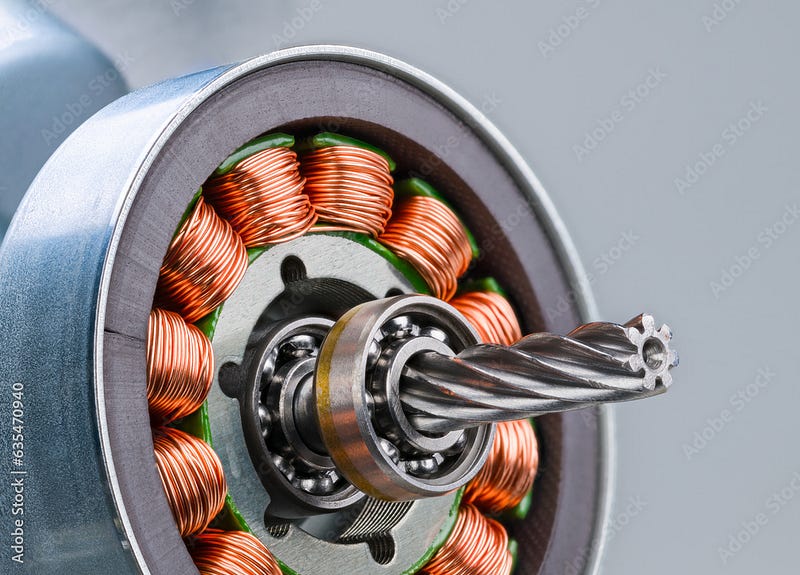 Credit:https://images.app.goo.gl/YQU4uTSiz9EaLQSv8
Relationship Between No-Load Current and Viscous Friction
During motor no-load operation, the dynamic equation can be simplified to:
J(dω/dt) + Bω = Tem
At steady-state speed, with zero acceleration, the equation further simplifies to:
Bω = Tem
At this point, the electromagnetic torque primarily overcomes viscous friction, and the electromagnetic torque is proportional to current:
Tem = KtI
Therefore:
I = (B/Kt)ω
Why Might the Viscous Coefficient Be Abnormally High?
1. Mechanical Causes — Poor bearing lubrication — Overtight seals — Excessive bearing preload — Gearbox lubricant viscosity too high
Environmental Factors — Low temperature causing increased lubricant viscosity — Dust contamination — Humid environment
Design Issues — Insufficient clearance — Improper seal design — Inadequate lubrication system design
How to Diagnose Viscous Coefficient Issues?
1. Free Deceleration Test
ω(t) = ω₀e^(-Bt/J)
- Observe deceleration time after power-off
- Should not decay too quickly under normal conditions
2. No-Load Power Analysis
P = Bω²
- Measure input power at different speeds
- Plot P-ω² curve
- Compare with standard values
3. Temperature Effect Testing
- Measure no-load current at different temperatures
- Observe temperature-current relationship
Solutions
- Mechanical Adjustments — Check and adjust bearing preload — Replace with appropriate viscosity lubricant — Clean and re-lubricate
2.Environmental Improvements — Enhance sealing — Control ambient temperature — Regular cleaning
- Design Optimization — Optimize clearance — Improve seal design — Enhance lubrication system
Measurement Methods
1. Viscous Coefficient Determination Using three previously mentioned methods:
- Free deceleration method
- Constant speed power method
- Torque-speed method
2. Experimental Considerations
- Ensure stable measurement temperature
- Use calibrated measuring instruments
- Take multiple measurements for averaging
- Record environmental conditions
Viscous Coefficient Reference Values
The normal range of viscous coefficients depends on several factors:
- Motor type and design
- Bearing type and size
- Lubrication method and lubricant properties
- Operating speed range
- Ambient temperature
Recommended reference sources:
- Motor manufacturer technical specifications
- Bearing manufacturer design manuals
- Relevant industrial standards
- Laboratory test data
For system diagnostics, the best reference values are historical data from the motor under normal operating conditions.
Conclusion
High no-load current can indeed be caused by abnormal viscous coefficients. Through systematic testing and analysis, we can:
- Confirm if the viscous coefficient is abnormal
- Identify specific causes
- Implement appropriate improvement measures
Regular monitoring and maintenance can prevent such issues and ensure motor system performance and longevity.
— -
This article provides technical reference for analyzing and solving motor high no-load current issues. Specific applications require consideration of actual system characteristics and operating conditions.