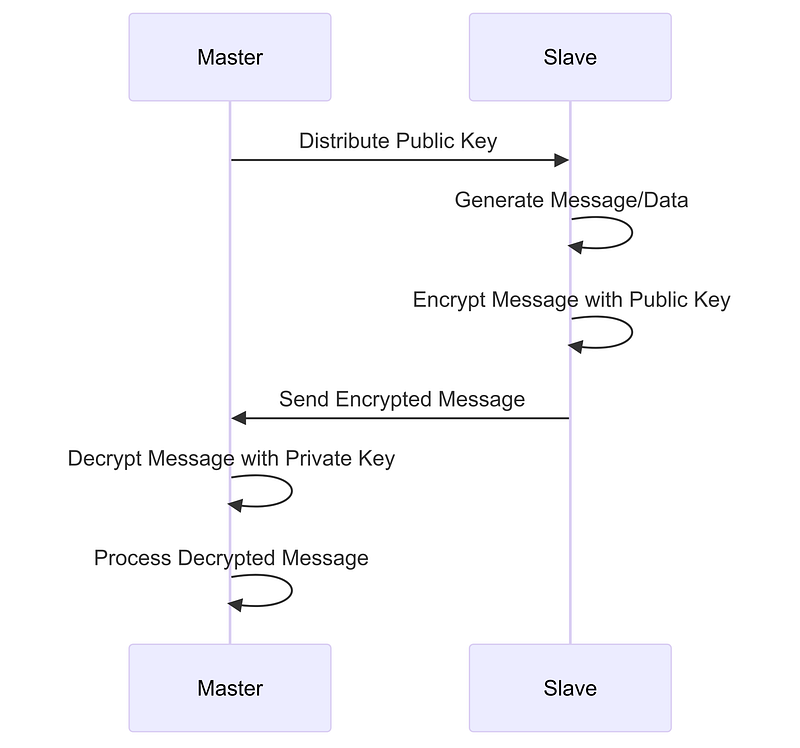
Have you ever wondered how your sensitive information stays secure when you browse the internet? The answer lies in a remarkable encryption system called RSA, named after its brilliant creators: Ron Rivest, Adi Shamir, and Leonard Adleman. In 1977, while working at MIT, these three mathematicians developed what would become one of the most fundamental building blocks of modern digital security.
The Simple Yet Powerful Idea Behind RSA
At its core, RSA is based on an elegant mathematical principle: multiplying two large prime numbers is easy, but working backwards to figure out which prime numbers were multiplied together is incredibly difficult. This asymmetry — easy in one direction, nearly impossible in the reverse — is what makes RSA such a powerful encryption system.
How RSA Works: A Peek Under the Hood
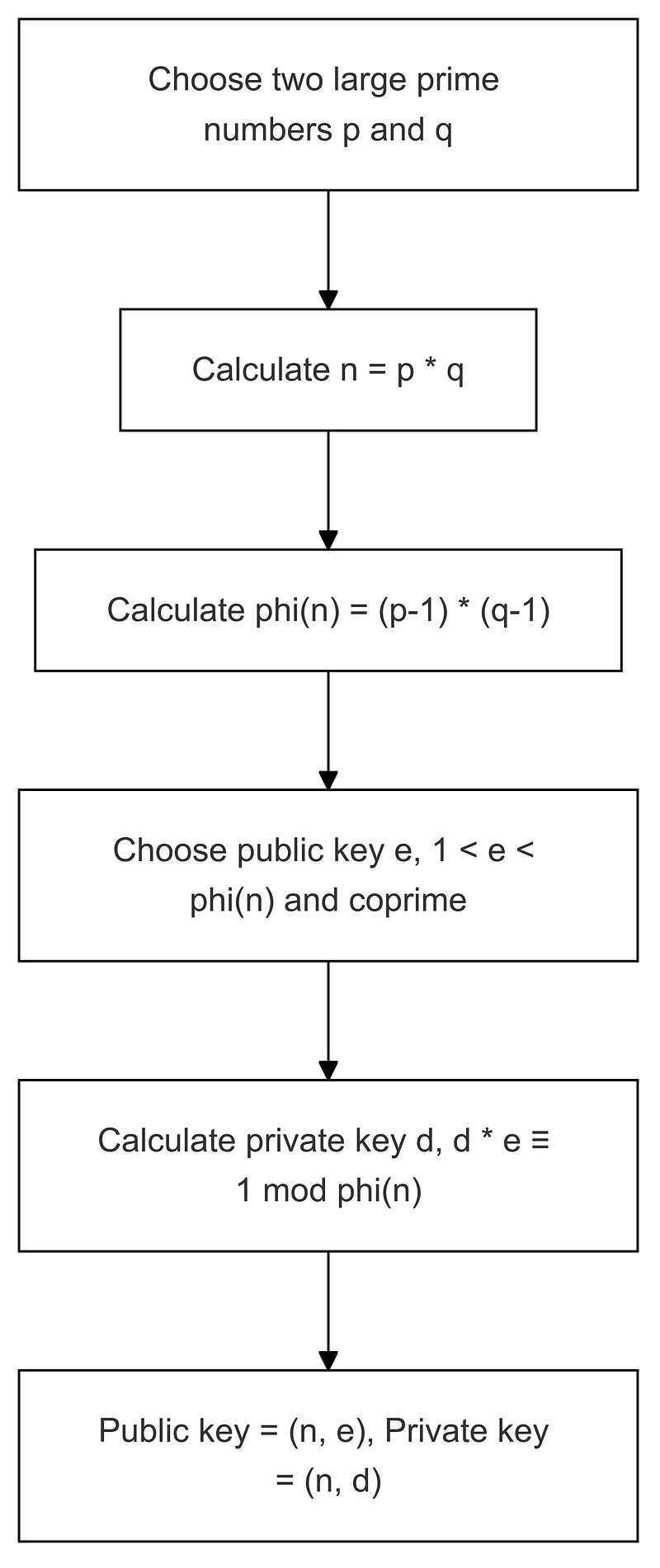
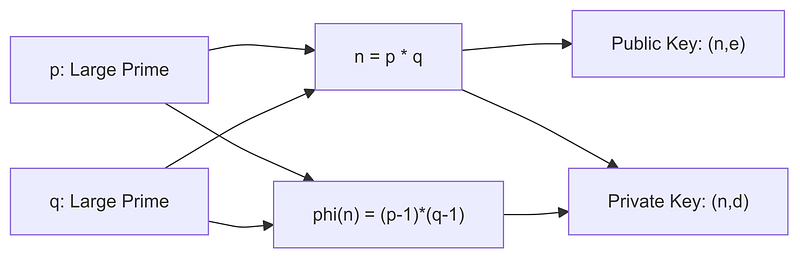
Imagine you have two massive prime numbers, each hundreds of digits long. Multiply them together, and you get an even larger number. This product becomes part of your public key — the key that anyone can use to encrypt messages for you. The fascinating part? Even if someone knows this large number, they can’t practically figure out the original prime numbers that created it. This mathematical challenge is known as the factorization problem.
How to Generate Public and Private Keys
The Public-Private Key Dance
RSA introduces an ingenious system of key pairs:
- A public key that anyone can use to encrypt messages
- A private key that only you possess to decrypt those messages
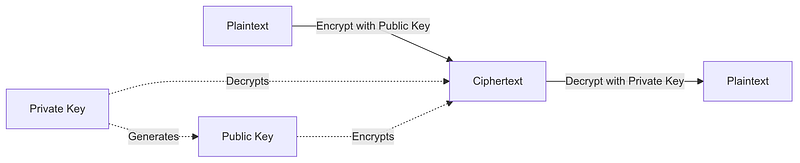
Think of the public key as an open padlock that you distribute widely. Anyone can put a message in a box and lock it using this padlock. However, only you, with your private key (the unique key to that padlock), can open it and read the message.
The Relationship Between Public and Private Keys
Why It’s Practically Unbreakable
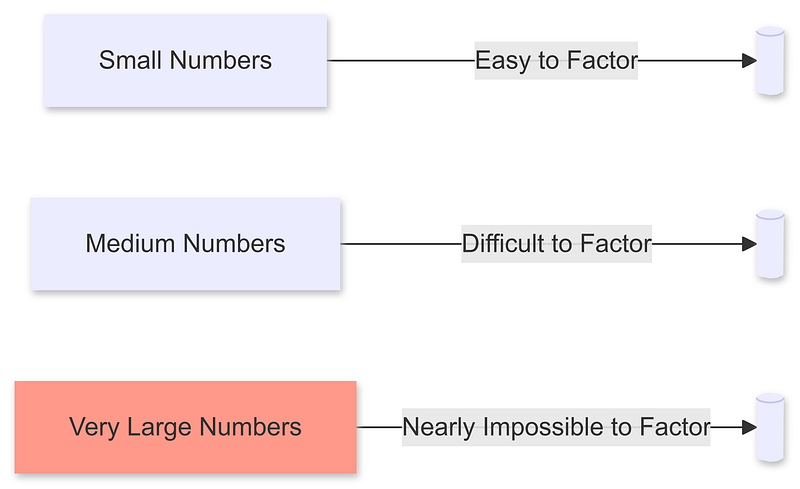
Let’s put the security of RSA into perspective:
- A typical RSA key today uses numbers that are 2048 or 4096 bits long
- In 1991, factoring a 409-digit number (RSA-129) took 8 months
- In 2020, breaking a 829-digit number (RSA-250) required 2700 core-years of computing power
- Modern RSA keys are significantly larger and more secure than these examples
The Quantum Computing Challenge
While RSA has proven remarkably resilient against traditional computing attacks, the advent of quantum computing poses new challenges. Theoretical quantum computers could potentially factor large numbers much more quickly than classical computers. However, practical quantum computers capable of breaking RSA are still far from reality.
Staying Ahead of the Game
The beauty of RSA lies in its scalability. As computing power increases, we can simply use larger prime numbers to maintain security. This adaptability has helped RSA remain secure for over four decades, and it continues to protect millions of digital transactions every day.
Why This Matters
Every time you:
- Check your email
- Make an online purchase
- Access your bank account online
- Send a secure message
You’re likely using RSA encryption or one of its variants. It’s the invisible guardian of our digital lives, ensuring that our sensitive information remains private and secure.
The Human Element
Perhaps the most remarkable aspect of RSA is how it transformed a profound mathematical concept into a practical solution for digital security. It’s a testament to human ingenuity — how three mathematicians at MIT took an abstract mathematical principle and used it to solve one of the most fundamental challenges of the digital age: secure communication.
Looking Forward
As we move deeper into the digital age, the importance of encryption systems like RSA only grows. While quantum computing may eventually necessitate new approaches to encryption, the fundamental principles behind RSA — mathematical complexity and computational asymmetry — will likely continue to influence how we think about and implement digital security.
The next time you send a secure message or make an online purchase, remember the elegant mathematical dance happening behind the scenes, keeping your information safe through the simple yet powerful principle of prime number factorization.